
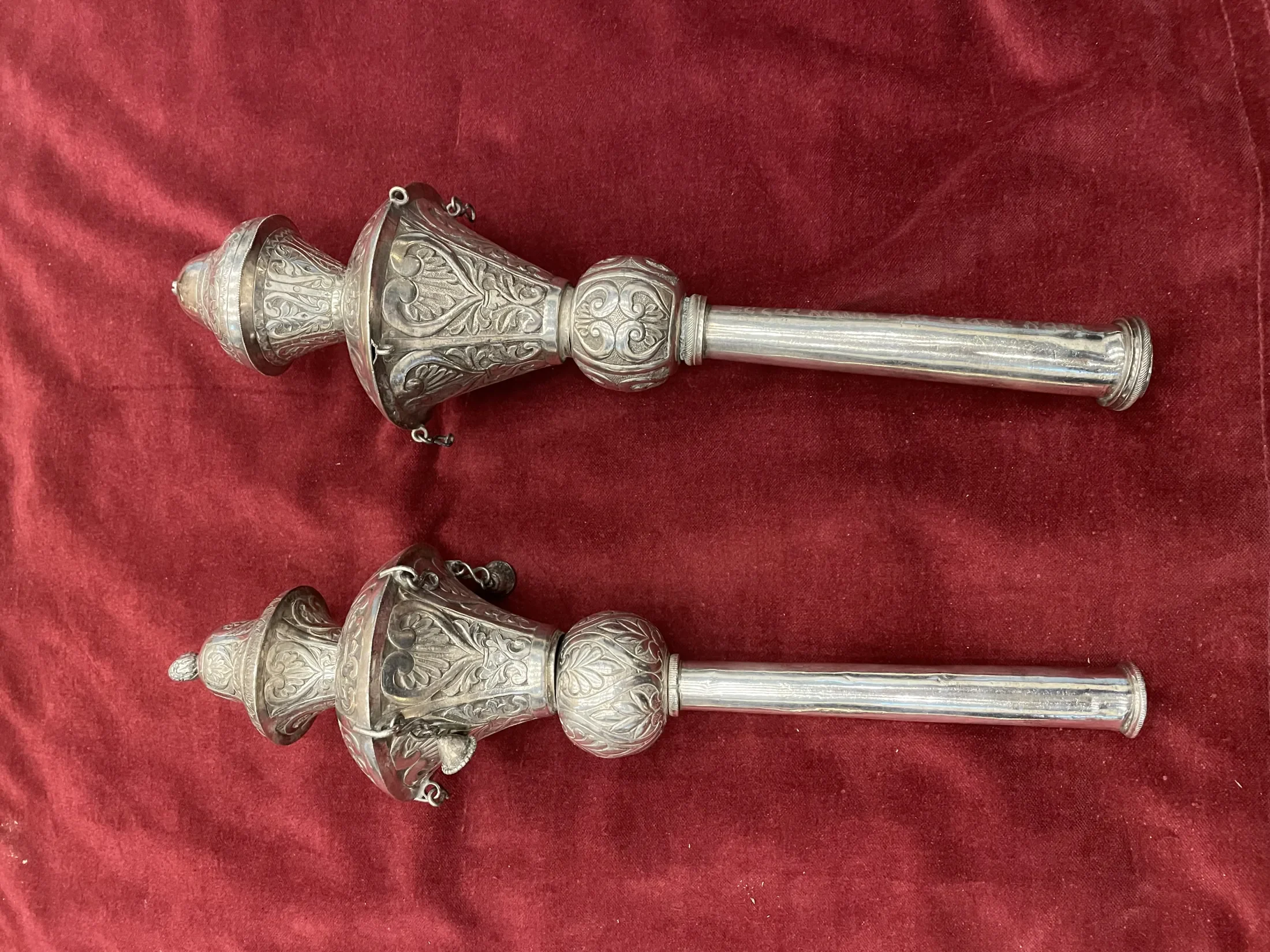
Sephardi culture in İzmir is carried through food, music, language, religious practice, family memory, festive gatherings and craft traditions. It is both local and connected to a wider Sephardi Mediterranean world.
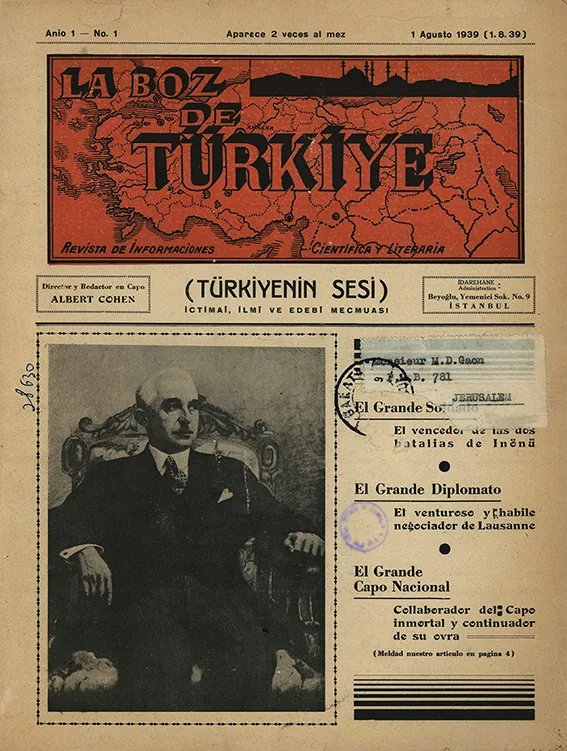 LadinoLanguage, memory and Judeo-Spanish cultural continuity
 MusicSynagogue sound, Ladino song and İzmir's musical figures
 GastronomyFood memory, home cooking and Sephardi cuisine in İzmir
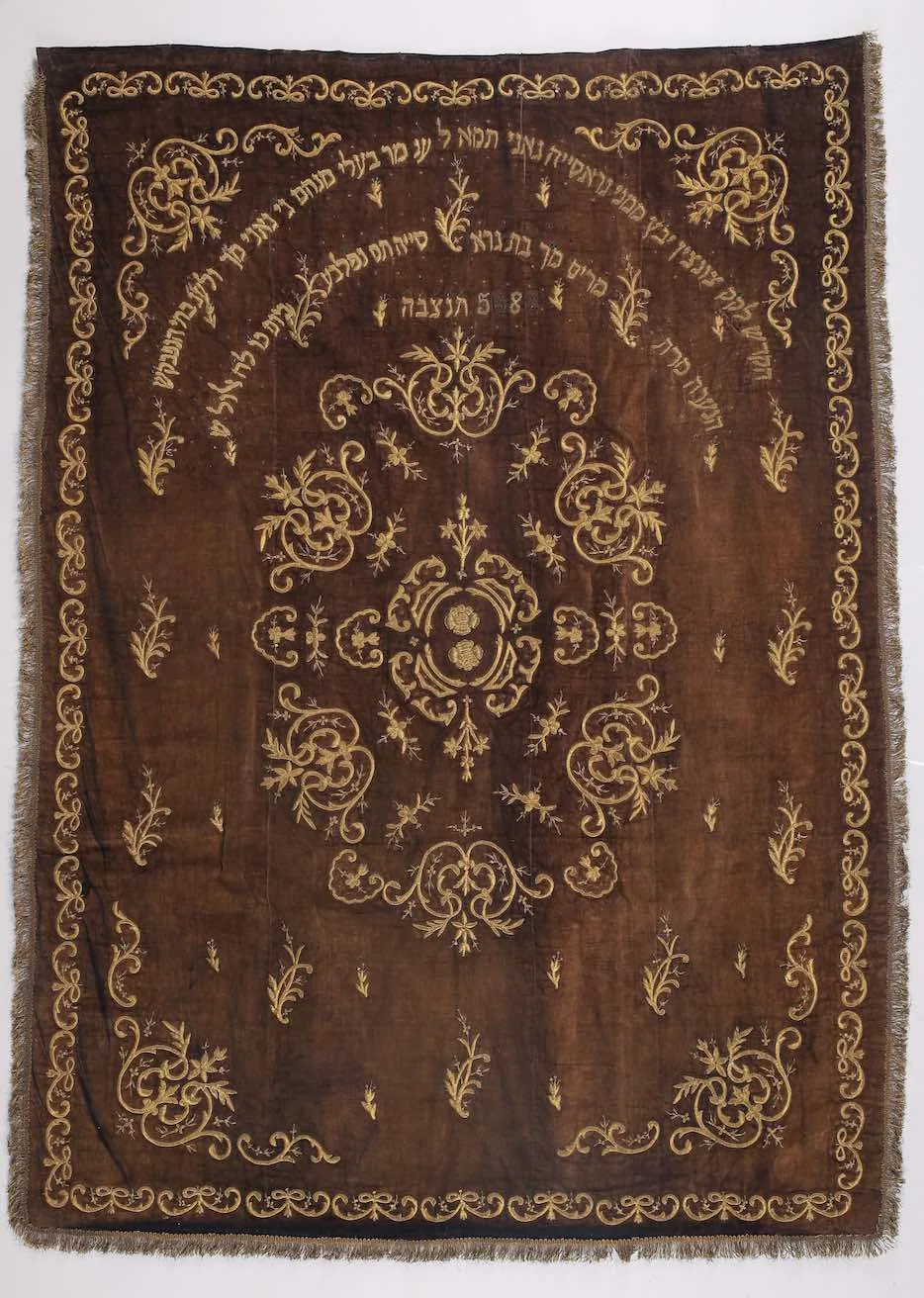 Ritual textilesEmbroidery, dedication and synagogue craft
Ladino
Ladino, or Judeo-Spanish, is one of the deep languages of Sephardi İzmir. It has lived in songs, sayings, family speech, newspapers, religious culture, humour, recipes and memory.
Ladino grew out of the Old Castilian Spanish that Jews spoke before their expulsion from Spain in 1492, and became a distinct Jewish language once its speakers were cut off from later changes in Spanish. In the Ottoman world it took in words from Hebrew, Aramaic, Turkish, Greek, Arabic and French. İzmir belongs to the eastern, Oriental variety, which stayed close to Castilian Spanish. Ladino was traditionally written in Hebrew letters, in Rashi script or in the cursive Solitreo, and only came to be written widely in the Latin alphabet in the twentieth century.
In İzmir today, Ladino is not simply a language of the past. It is also a question of transmission: who remembers it, who studies it, who sings it, who records it, and how younger generations choose to carry it. İzmir was home to an important Ladino press, and the city continues to take part in wider efforts to document and teach the language.
Music
Music is one of the clearest threads of Sephardi İzmir. It runs through the liturgy of the synagogues, through Ladino song at home and at festive gatherings, and through the wider world of Ottoman and Turkish music that the city’s Jewish musicians helped to shape.
İzmir produced Isaac Algazi (1889-1950), a cantor of the Algazi Synagogue and one of the major composers of religious, secular and classical Turkish music of his time. He came from a family of cantors, learned Ottoman-Turkish music alongside the Jewish repertoire, and became a respected figure among the musicians of the early Republic, performing for Atatürk at Dolmabahçe Palace before leaving Turkey in 1933.
Sephardi song in Ladino, along with the synagogue tradition of the Maftirim choral repertoire, continues to be recorded and performed. The documentary Sephardic Music, by the Istanbul filmmaker and musicologist Ömür Şenol, premiered in 2022 and features musicians and researchers from Istanbul and İzmir. The city also remembers Dario Moreno, the singer raised in the old Jewish quarter who became famous in France and Latin America.
Cuisine
İzmir Sephardi cooking holds a strong place in the food culture of western Anatolia. It carries the Iberian inheritance of the Sephardi families who settled in the city, reshaped over centuries by local ingredients and by life in a busy port.
Food and communal life sat close together in the first Juderia. Havra Street, named for its synagogues, grew into a market for kosher food, where the community bought much of its meat, fish, chicken, yoghurt, cheese and eggs, and where kosher wine was produced. The courtyard houses of Ikicesmelik, the kortijos, became tied to local favourites such as boyos and subiye, a drink made from melon seeds.
In 2004 six women of the community, Ester Antebi, Sara Enriquez, Lina Eskenazi, Nüket Franco, Ora Gürkan and Jinet Sidi Sarfati, gathered a hundred recipes into a book of İzmir Sephardic cuisine, drawn from their own kitchens and from what they had learned from earlier generations. The dishes range from boyos and burekas to fritada and empanadas, and sweets such as mustachudos, mogados and pandespanya. The book was written to keep a living tradition from fading and to share it beyond the community.
Ritual textiles and craft
Craft in Sephardi İzmir was often bound to religious life, the home and the festival calendar. The most distinctive surviving tradition is synagogue textile work: Torah covers and mantles, curtains for the Ehal, embroidered cloths and dedicated pieces cared for across generations.
These textiles belong beside the city’s books, silver objects and synagogues. They carry names, family memory, skill and devotional use, and were among the themes documented by the İzmir Jewish Heritage Project.